A dairy free pancake recipe makes fluffy, delicious pancakes without milk or butter using pantry staples like flour, baking powder, oil, and water or plant-based milk. These dairy-free pancakes work by replacing dairy liquids with alternatives like almond milk, coconut milk, or water while maintaining leavening power through baking powder and binding through eggs or flax eggs.
Dairy free pancakes deliver three main benefits: they accommodate lactose intolerance, reduce allergy risks, and use shelf-stable ingredients you likely have on hand. People use dairy free breakfast recipes for weekday mornings, weekend brunch, meal prep, and feeding families with diverse dietary needs.
The main components of a dairy free pancake recipe include dry ingredients (all-purpose flour, baking powder, sugar, salt), wet ingredients (dairy free milk, oil, egg, vanilla extract), and cooking equipment (mixing bowls, griddle pan, measuring cups).
This guide covers why you’ll love the recipe, ingredient substitutions, step-by-step instructions, expert tips, storage methods, and variations including gluten free pancakes and vegan options.
Why You’ll Love This Recipe
This dairy free pancakes recipe delivers fluffy morning indulgence with five standout qualities. The texture stays light and airy without dairy through proper leavening and mixing technique. The flavor profile remains rich and satisfying using vanilla extract and quality oil instead of butter.
The prep time stays under 10 minutes with simple pantry ingredients. The recipe adapts easily to gluten free, vegan, or nut-free needs with straightforward swaps. The results earn kids approved recipe status while meeting allergy friendly breakfast requirements.
Can You Make Pancakes Without Milk?
Yes, you can make pancakes without milk using water, almond milk, coconut milk, oat milk, or other dairy free milk alternatives. Water works as a direct milk substitute when combined with oil and vanilla extract to replace lost richness.
Almond milk lactose free options add subtle nutty flavor while coconut milk from the refrigerated section contributes creamy consistency. The key to successful pancakes without milk involves adjusting liquid ratios slightly and ensuring adequate leavening through fresh baking powder.
Ingredients & Substitutions

What You’ll Need
Dry Ingredients:
- 1½ cups all-purpose flour (or gluten free flour blend)
- 1 tablespoon sugar (white, brown, or coconut sugar)
- 1 tablespoon baking powder (aluminum-free preferred)
- ½ teaspoon salt
Wet Ingredients:
- 1¼ cup almond or coconut milk (refrigerated section) or water
- 3 tablespoons canola oil, vegetable oils, or melted coconut oil
- 1 egg (or flax egg for vegan pancakes)
- 1 teaspoon vanilla extract
Optional Add-Ins:
- Chocolate chips, blueberries, sliced bananas, or cinnamon spice variation
Substitution Guide:
- Dairy free milk: Swap almond milk, coconut milk, oat milk, or lactose free milk 1:1
- Flour: Replace all-purpose flour with gluten free flour blend containing xanthan gum
- Eggs: Use 1 tablespoon ground flaxseed + 3 tablespoons water per egg for egg-free pancakes
- Oil: Substitute canola oil with olive oil, avocado oil, or melted vegan butter
- Sugar: Exchange white sugar with maple syrup (reduce other liquids by 1 tablespoon)
How to Make Dairy-Free Pancakes (Step-by-Step)

Step 1: Mix Dry Ingredients
Whisk together all-purpose flour, sugar, baking powder, and salt in a large mixing bowl. Measure flour using the spoon-and-level method to avoid dense pancakes. Ensure baking powder is fresh for maximum rise—replace if older than 6 months. Set the dry mixture aside while preparing wet ingredients.
Step 2: Mix Wet Ingredients
Combine dairy free milk (almond milk, coconut milk, or water), canola oil, egg, and vanilla extract in a separate bowl. Whisk vigorously for 60 seconds until the mixture bubbles slightly and sugar dissolves. Use room temperature ingredients for even mixing and consistent batter texture.
Step 3: Combine Wet and Dry Ingredients
Create a well in the center of the dry ingredients. Pour the wet mixture into the well. Fold gently with a spatula until just combined—small lumps remain acceptable. Overmixing develops gluten and creates tough, chewy pancakes. Let the batter rest 5-10 minutes to hydrate flour and activate baking powder.
Step 4: Cook the Pancakes
Heat a non-stick griddle pan or electric griddle to medium-low heat (350°F / 175°C). Lightly coat with canola oil or coconut oil using a paper towel to spread evenly. Pour ⅓ cup batter per pancake onto the hot surface. Cook 2-3 minutes until bubbles form across the surface and edges set. Flip carefully and cook 1-2 minutes more until golden brown. Keep finished pancakes warm in a 200°F (93°C) oven while cooking remaining batches.
Step 5: Serve and Enjoy!
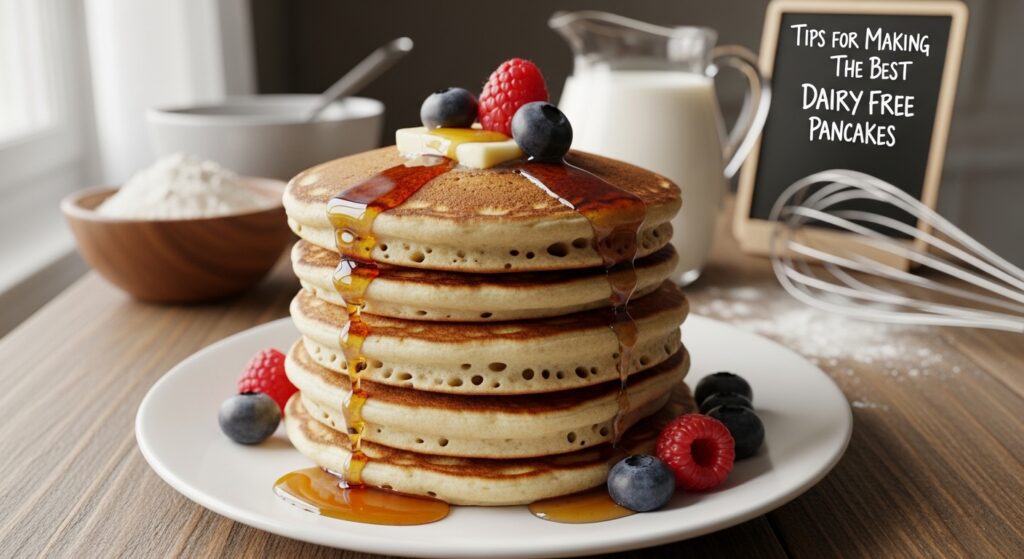
Stack dairy-free pancakes on plates while warm. Top with maple syrup, fresh berries, or dairy free syrup options. Serve immediately for best texture—pancakes deflate slightly as they cool. Pair with scrambled eggs without milk, fresh fruit, or savory breakfast items for a complete dairy free breakfast.
Recipe
Ingredients
Yields 8-10 pancakes | Prep: 5 min | Cook: 15 min | Total: 20 min
- 1½ cups (180g) all-purpose flour
- 1 tablespoon (12g) sugar
- 1 tablespoon (12g) baking powder
- ½ teaspoon (3g) salt
- 1¼ cups (300ml) almond milk, coconut milk, or water
- 3 tablespoons (45ml) canola oil or vegetable oil
- 1 large egg
- 1 teaspoon (5ml) vanilla extract
- Oil or vegan butter for greasing pan
Instructions
- Whisk flour, sugar, baking powder, and salt in a large bowl until evenly distributed.
- In a separate bowl, whisk together dairy free milk, oil, egg, and vanilla extract until bubbly.
- Pour wet ingredients into dry ingredients. Fold gently with a spatula until just combined—batter should remain slightly lumpy.
- Rest batter 5-10 minutes at room temperature.
- Heat griddle or skillet to medium-low heat. Lightly grease with oil.
- Pour ⅓ cup batter per pancake. Cook 2-3 minutes until bubbles form and edges set.
- Flip and cook 1-2 minutes more until golden brown.
- Transfer to a wire rack or warm oven (200°F / 93°C) while cooking remaining pancakes.
- Serve warm with maple syrup and desired toppings.
Notes
- For extra fluffy dairy free pancakes, separate the egg: add yolk with wet ingredients, whip white to soft peaks, and fold in just before cooking.
- Refrigerated coconut milk works best—canned coconut milk is too thick and alters batter consistency.
- Adjust sweetness by adding 1-2 extra tablespoons sugar if serving without syrup.
- For crispy edges, increase heat slightly and add a bit more oil to the cooking surface.
- First pancake often tests pan temperature—adjust heat if it browns too quickly or cooks too slowly.
Nutritional Information
Per pancake (based on 10 servings, using almond milk and canola oil)
- Calories: 145 kcal
- Carbohydrates: 18g
- Protein: 3g
- Fat: 7g
- Saturated Fat: 1g
- Cholesterol: 19mg
- Sodium: 245mg
- Fiber: 1g
- Sugar: 2g
- Calcium: 95mg
- Iron: 1mg
Values are estimates. Nutritional content varies based on specific ingredients and portion sizes.
Can Water Really Replace Milk?
Yes, water replaces milk effectively in dairy free pancake recipe preparations when combined with oil and vanilla extract. Water provides necessary liquid for hydration while oil replaces butter’s fat content and vanilla extract compensates for lost dairy flavor.
The resulting pancakes achieve dairy-free stack perfection with proper technique: use 1¼ cups water plus 3 tablespoons oil to replace 1¼ cups milk, maintain adequate baking powder for lift, and avoid overmixing batter. Water-based pancakes taste neutral, allowing maple syrup and toppings to shine while delivering nutrient packed breakfast value without dairy allergens.
Tips for Making the Best Dairy-Free Pancakes
- Use fresh baking powder—test by mixing ½ teaspoon with hot water; it should bubble vigorously.
- Rest batter 5-10 minutes to hydrate flour and activate leavening agents fully.
- Maintain medium-low heat (350°F / 175°C) to cook pancakes through without burning exteriors.
- Avoid pressing pancakes with a spatula while cooking—this deflates air pockets and reduces fluffiness.
- Keep cooked pancakes warm in a single layer on a wire rack in a 200°F (93°C) oven to prevent sogginess.
- Measure flour accurately using the spoon-and-level method to prevent dense results.
- Whisk wet ingredients thoroughly to emulsify oil and dairy free milk for even batter consistency.
- Fold wet and dry ingredients just until combined—small lumps improve final texture.
- Use a ⅓-cup measuring cup for consistent pancake size and even cooking.
- Wait for surface bubbles and set edges before flipping to ensure proper structure development.
Serving Suggestions
Serve dairy-free pancakes with maple syrup heaven toppings like fresh berries, sliced bananas, or dairy free whipped cream. Create brunch spreads by pairing pancakes with scrambled eggs without milk, fruit compote, or dairy free yogurt.
Try savory applications: top pancakes with avocado, dairy free cream cheese, and smoked salmon for a weekend brunch staple. Enhance flavor with cinnamon spice variation, chocolate chip surprise additions, or blueberry burst goodness folded into batter. Drizzle with warmed maple syrup, fruit compote, or dairy free chocolate sauce for dessert-style presentation.
Recipe & Diet Variations
Gluten Free Dairy-Free Pancakes: Replace all-purpose flour with a 1:1 gluten free flour blend containing xanthan gum. Add 1 extra tablespoon dairy free milk if batter appears too thick.
Vegan Pancakes: Substitute egg with 1 tablespoon ground flaxseed + 3 tablespoons water (let sit 5 minutes to gel). Use maple syrup instead of white sugar if avoiding refined sugars.
Whole Wheat Pancakes: Replace half the all-purpose flour with whole wheat flour for added fiber. Increase dairy free milk by 2 tablespoons to compensate for whole wheat’s higher absorption.
Protein Boost: Add 2 tablespoons protein powder to dry ingredients and increase dairy free milk by 3 tablespoons to maintain batter consistency.
Banana Walnut Sensation: Fold ½ cup mashed ripe banana and ¼ cup chopped walnuts into batter just before cooking for natural sweetness and crunch.
Chocolate Chip Variation: Sprinkle dairy free chocolate chips onto pancakes immediately after pouring batter onto the griddle for even distribution.
Equipment
- Large mixing bowls (2): One for dry ingredients, one for wet
- Measuring cups and spoons: For accurate portioning
- Whisk or wooden spoon: For mixing without overworking batter
- Griddle pan or electric griddle: Presto electric griddle provides even heat distribution
- Spatula: Thin, flexible design for easy flipping
- Wire rack and baking sheet: For keeping cooked pancakes warm
Expert Tips
Professional bakers achieve consistent dairy free pancakes through three controlled variables: temperature, timing, and technique. Maintain griddle surface at 350°F (175°C)—use an infrared thermometer for accuracy.
Cook pancakes 2-3 minutes per side; flip only once when bubbles cover 80% of the surface. Fold batter with a spatula using a figure-eight motion to minimize gluten development. Rest batter 10 minutes maximum—longer rests deactivate baking powder and reduce rise. For restaurant-quality results, clarify oil before cooking to remove milk solids that could trigger dairy sensitivities.
Storage Tips
Store leftover dairy-free pancakes in an airtight container in the refrigerator for up to 4 days. Place parchment paper between pancakes to prevent sticking. Reheat in a toaster oven at 350°F (175°C) for 2-3 minutes to restore crisp edges.
Avoid microwaving alone, which creates rubbery texture—combine microwave (20 seconds) with brief toasting for best results. Store batter separately from cooked pancakes; refrigerate unused batter up to 24 hours in a sealed container, though rise may decrease slightly due to baking powder activation.
Freezer Instructions
Freeze dairy-free pancakes for up to 3 months using this method: Cool pancakes completely on a wire rack. Arrange in a single layer on a parchment-lined baking sheet. Freeze 1-2 hours until solid. Transfer to freezer bags with parchment between layers to prevent sticking.
Label with date and contents. Reheat frozen pancakes directly in a toaster, toaster oven, or conventional oven at 350°F (175°C) for 5-8 minutes. Do not thaw at room temperature, which creates condensation and soggy texture.
How to Prep Ahead
Prepare dry ingredients (flour, sugar, baking powder, salt) in advance and store in an airtight container for up to 1 month. Mix wet ingredients (dairy free milk, oil, egg, vanilla) the night before and refrigerate in a sealed jar. Combine wet and dry components just before cooking for optimal rise.
For meal prep, cook a full batch of pancakes, cool completely, and freeze using the method above. Reheat individual portions as needed for quick weekday treat breakfasts.
Recipe FAQs
Can I make dairy free pancake recipe without eggs? Yes, replace each egg with 1 tablespoon ground flaxseed + 3 tablespoons water (let sit 5 minutes) or ¼ cup unsweetened applesauce. Texture may be slightly denser but still fluffy.
What dairy free milk works best for pancakes? Unsweetened almond milk, oat milk, or refrigerated coconut milk provide neutral flavor and proper consistency. Avoid canned coconut milk, which is too thick.
Why are my dairy-free pancakes dense? Overmixing batter, expired baking powder, or incorrect pan temperature cause dense results. Fold gently, verify leavener freshness, and maintain medium-low heat.
Can I use this recipe for waffles? Yes, add 1 extra tablespoon oil to the batter for crispier waffle texture. Cook in a preheated waffle iron according to manufacturer instructions.
How do I make this recipe keto-friendly? Replace all-purpose flour with almond flour (use 2 cups almond flour + 2 tablespoons coconut flour) and substitute sugar with erythritol or monk fruit sweetener. Expect a denser, nuttier result.
What if I don’t have vanilla extract? Use ½ teaspoon almond extract or maple extract instead. Omitting extract entirely works but reduces flavor complexity.
Can I double this recipe? Yes, multiply all ingredients by two. Mix in batches if your bowl is small to ensure even incorporation without overmixing.